
Project specific
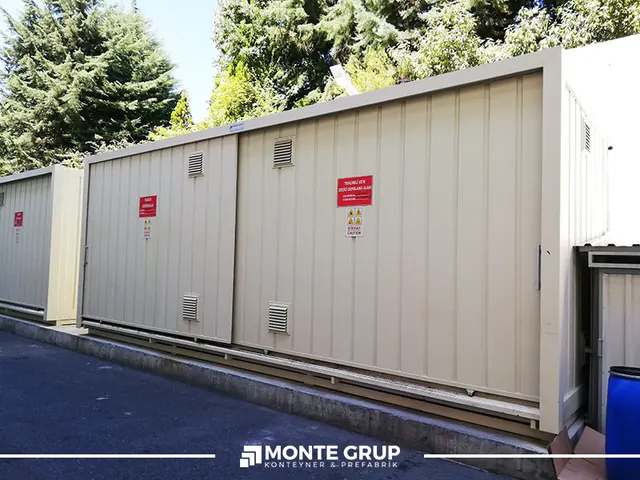
Chemical Waste Storage Container
A dedicated container family for segregated, controlled chemical-waste storage on industrial sites. Drum, canister and IBC layouts are considered alongside containment, shelving and ventilation…

Illustrative product image. The final appearance follows the approved project.
Containers designed around the loading and emptying of production residues, treatment sludge and bulky solid waste. Fixed and tipping arrangements are assessed together with body geometry, plate selection and lifting interfaces. Compatibility with forklifts or other handling equipment is determined from the waste density, operating method and the conditions at the installation site.
Dimensions, equipment and delivery scope are confirmed in the approved project.
A CLOSER LOOK
Volume alone does not describe the handling requirement of a solid-waste container. The same footprint can carry very different loads when filled with lightweight production residues or dense sludge. Waste type, density and loading method should therefore be identified before the body is specified. This family covers fixed and tipping arrangements for collecting solid waste in production, treatment and site operations.
Body strength, emptying geometry and handling interfaces are reviewed as one project. Where a forklift or lifting system will be used, the dimensions and operating method of the actual equipment need to be provided. Lids, drainage details and different plate thicknesses can be assessed against the material and process. Cleanability, material remaining after discharge and access for maintenance also belong in the design discussion.
For a quotation, describe the waste, its approximate density, expected loads and existing handling equipment. Loading height, the discharge point, working surface and available space directly affect the choice. Rather than assuming one catalogue load capacity applies everywhere, the project defines an appropriate technical scope. The approved drawing and specification should allow volume, permitted load, handling connections and operating limits to be assessed together. This gives the facility a consistent relationship between the container body and the equipment and working practices used around it.
SPECIFICATIONS
| Type | Fixed or automatic tipping options |
|---|---|
| Handling | Based on forklift or lifting-system data |
| Volume and load | Defined together with waste density and the operation |
| Body details | Plate thickness, lid and drainage defined per project |
Dimensions and equipment are confirmed for the selected unit in the technical quotation.
RELATED PRODUCTS
A dedicated container family for segregated, controlled chemical-waste storage on industrial sites. Drum, canister and IBC layouts are considered alongside containment, shelving and ventilation…
A container solution for managing hazardous waste streams within a controlled temporary storage area. Containment, access, ventilation and fire-safety requirements are considered together. Compartments…

Containers arranged around tanks, drums or IBCs for the separate collection of waste oil from maintenance and production. Filling, removal and secondary containment are…

LET’S PLAN YOUR PROJECT
Share the size, intended use, quantity and destination. Let’s define the technical scope together.
